"At 68 — pacemaker fitted, sleep apnea treated — I'm fitter than I've been in 30 years. It very nearly didn't turn out that way." — The Developer
My Health Journey
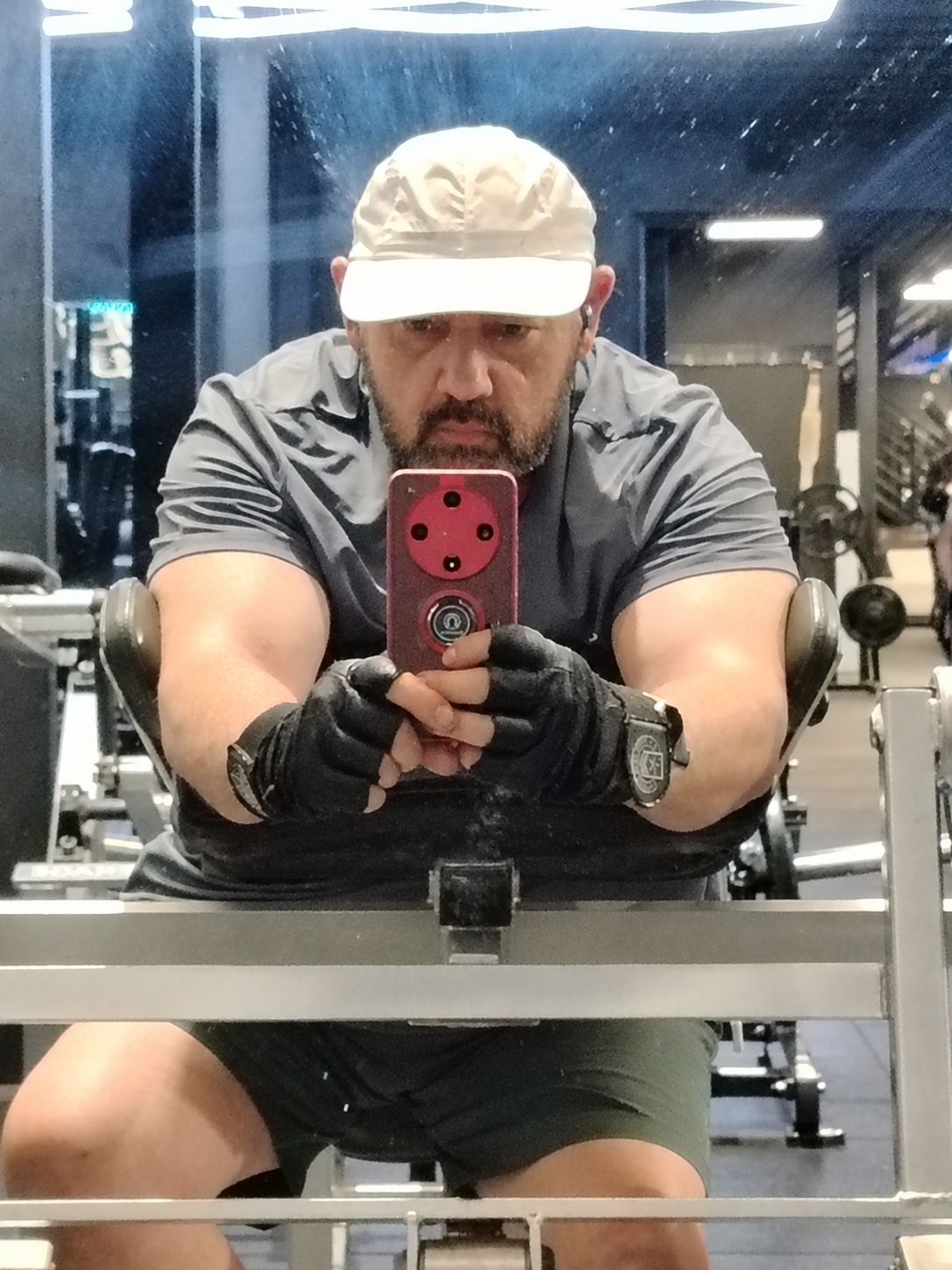
For 15 years, I lived in a constant fog of exhaustion. I had no idea that what I was experiencing wasn't simply tiredness — it was my body silently suffocating, night after night, from severe Sleep Apnea.
The lack of energy felt normal. It crept up so gradually that I had nothing to compare it against. It wasn't until the condition began to damage my heart — eventually manifesting as a first-degree heart block — that the alarm bells finally rang.
What followed was a frightening and frustrating chapter. I started collapsing without warning. I would wake in the night, fighting for breath, heart pounding. Despite multiple emergency trips to A&E, my dangerously low oxygen levels and breathing struggles were repeatedly misdiagnosed as asthma and sent home.
The Turning Point
The truth only emerged during a hospital stay, where an overnight Holter monitor event left me blue-lipped and the nursing staff visibly shaken. What had been dismissed for years was suddenly impossible to ignore.
15 years of misdiagnosis
Severe Sleep Apnea repeatedly dismissed as fatigue and asthma.
Collapse & A&E visits
Repeated emergency admissions. Low oxygen, breathing crises — still no answer.
Holter monitor event in hospital
An overnight episode finally captured on record. The truth was undeniable.
Pacemaker fitted
One week after the hospital event, a pacemaker was implanted.
CPAP therapy begins
Six months later, a sleep clinic identified Sleep Apnea as the root cause. CPAP changed everything.
One year on — "a few ectopics"
A routine pacemaker review mentioned ectopic beats — a word I'd never heard. The York Cardiologist's videos put my mind at rest. I just wanted to keep count.
Cardio Capture disappears
The little app I used to count them was gone, and the alternatives didn't measure up. I sketched out my own.
Today
At 68, fitter than I have been in 30 years — and determined to help others find answers sooner.
Where IT Meets Healthcare
Having spent my career in IT development, I have always been drawn to the intersection of data and real-world problems. Following my diagnosis, I threw myself into learning everything I could about heart health, rhythm anomalies, and the ectopic beats I still experience every single day.
The first version was very basic — an ECG trace and a counter — but that was all I needed. It only started to grow when I realised it could be useful to other people, and the more I added, the more ideas came. My background is in IBM AS/400 systems — about as far from AI as you can get. What it gave me was the habit of putting myself in the user's position; and in this case, the user was me. In truth, I have enjoyed every step of building it — it must be almost ten years since I last wrote a line of code, and it feels good to engage my brain again.
The Polar H10 captures ECG at 130Hz — high-resolution sampling in a chest strap costing less than a decent pair of trainers. By pairing that hardware with on-device neural networks, I could build a tool far more powerful than a simple event counter: a monitor that analyses what it records in real depth — entirely on your own device. Data only leaves when you choose to export it — as a PDF report, or the full raw recording as CSV. It's your data.
But this is not just a monitor for catching ectopics. The same platform can support workout analysis, HRV trending, overnight sleep cardiac monitoring, breathing rate estimation, and much more. The scope is as broad as the data is rich.
Take the meditation engine — a set of physiology-driven soundscapes rather than a timer with background music. The accelerometer reads the tiny movement of your chest, live heart rate and RR intervals measure how strongly your heart and breath are coupled, and a spatial audio engine answers in sound: the Resonance soundscape hides a shimmer that only blooms when the two synchronise. The app doesn't just report HRV — it actively helps you raise it. For many companies this would be a separate paid app or subscription; here it is simply part of the free Android app, because the whole point of the data is to help people improve.
Looking back, if this had existed then I would have used it — first for reassurance, then for answers. Before my many visits to A&E, it would have told me what the problem actually was. Years earlier still, it would have shown me the sleep apnea — and where I was headed if I didn't make changes. That is the point of all of this: to be genuinely useful, it has to work for a wide variety of people, not just people like me.
A Note on Pricing & Motivation
I know first-hand what undiagnosed Sleep Apnea can do. It nearly killed me. Not dramatically, not all at once — but quietly, over 15 years, stealing energy, damaging my heart, and robbing time I can never get back.
That is why the Android monitor app is free, and it always will be. No catch. If better monitoring helps even one person get a diagnosis sooner, every hour spent building this was worth it. If you like it, you can buy me a coffee — no pressure, entirely optional.
The web Studio — the deeper analysis dashboard — requires a single payment of two cups of coffee (£8). It is not a subscription. It is a one-time contribution to cover development costs and — frankly — to buy my wife a gift for all the time she has spent with me locked away building this.
I feel incredibly lucky that my story didn't end ten years ago. This app is my way of making sure that luck counts for something.
Buy Me a Coffee
If this app has been useful to you, a one-time contribution helps cover development costs and keeps the project alive. No subscription. No pressure. Just gratitude, if you feel it.
Buy a CoffeeAcknowledgements
Two people deserve a particular mention — one who inspired this project, and one who helped me make sense of my own heart.
For years I relied on Cardio Capture — a beautifully simple Polar monitor app — to track my ectopic beats. It did exactly what it needed to do, without fuss. When my phone ran into trouble and I went looking for it again, it was gone. That gap is the direct reason this project exists. Thank you, Tiberius, for building something so good that losing it was worth replacing.
When ectopic beats would strike and panic set in, this man's videos were a lifeline. Clear, calm, authoritative — and free. He has an extraordinary gift for explaining complex cardiology in plain language, and his content on ectopics genuinely helped me understand that they are far more common than most people realise, and they do not mean you are about to die. If you experience ectopics and feel frightened by them, I cannot recommend his channel highly enough.
Watch on YouTubeAnd one final note — even if it's against my own interests: don't obsess over the numbers. Checking your data every day is a bit like reaching for your pulse the moment you feel an ectopic beat, just to reassure yourself you're still alive. The single best thing you can do for your heart is simpler than any app: just get up and move more.
Help me make it better
Here's the honest truth: very little real-world ECG data exists for many arrhythmia types recorded from a Polar H10. Most open datasets come from 12-lead clinical monitors. Every real recording from a single-lead chest strap — especially one where you felt something the app missed, or it flagged something you didn't feel — is genuinely valuable for improving detection for everyone.
If you'd like to contribute, open a session in the phone app → tap ⋮ → Submit for Review. The app attaches the full ECG to an email pre-addressed to me. Nothing is sent without your tap. See the Help page for the full walkthrough.
A Few Honest Answers
Why is the app free?
It started life as a personal tool — built for me, to count my own ectopics. As it grew, making it free felt like the obvious choice: if it helps even one person get answers sooner than I did, it has done its job.
So why does the Studio dashboard cost money?
The phone app costs me nothing to give away — the dashboard does. Server hosting, the licence system, and years of development time all add up. A one-off £8 — two cups of coffee — seemed fairer than a subscription. The longer answer is in the pricing note above.
Will it ever become a subscription?
No. One payment, once — I'm not a fan of renting software back to people.
Do I need a Polar H10, or will any smartwatch do?
The app is built for the H10 chest strap. It records a genuine ECG at 130Hz — optical wrist sensors only estimate pulse, which is not the same thing. For what it costs, the H10 is remarkable kit.
Why does it only work on Android?
Honest answer: I don't own any Apple products. An iPhone version would mean buying a Mac and paying Apple's developer fees every year — a steep ask for a free app.
Is my data uploaded anywhere?
No. Your recordings are stored and analysed on your phone — there's no account, no cloud sync, no analytics watching you. Data only leaves when you export it yourself, as a PDF report or a raw CSV.
Is this a medical device?
No — it's for awareness and tracking, not diagnosis. It can show you patterns worth mentioning to your GP; it can't replace one.
Can it tell me if I'm having a heart attack?
No — and if you think you might be, call emergency services, don't open an app. What this does is record what your heart is doing over time, so unusual patterns get seen — and shared with someone qualified to act on them.
Will there be a version 2?
Already on the drawing board — wider and deeper analysis, and more biomarkers beyond the heart. There are a few hurdles to clear first, but once this version is live and working, I'll see how far I can take it.